
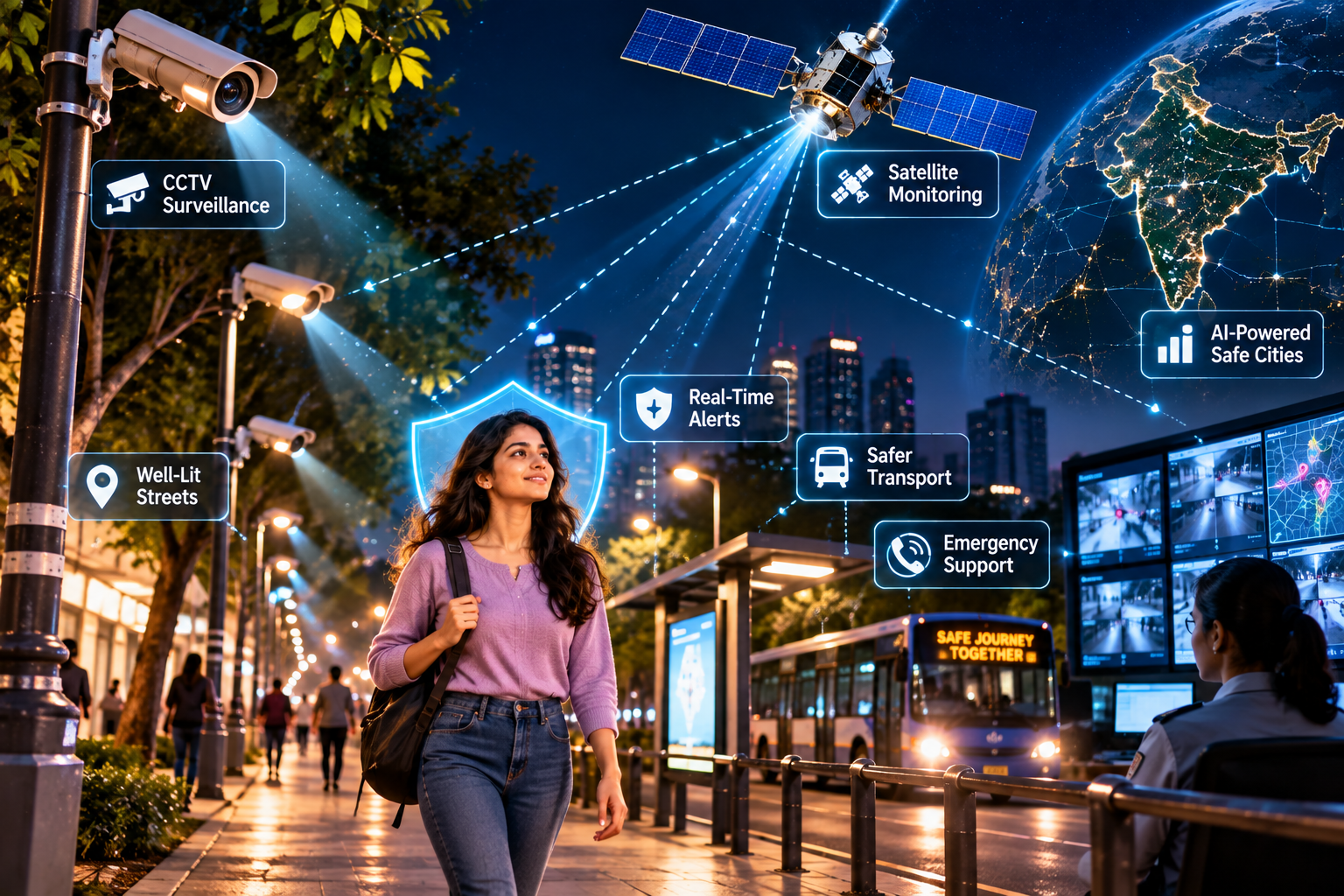
 September 4, 2026: India Looked at Earth from Space
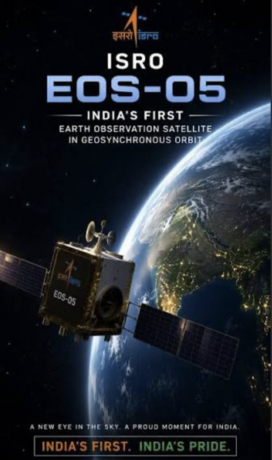
On September 4, 2026, ISRO successfully launched the GSLV-F17 carrying EOS-05 from the Satish Dhawan Space Centre in Sriharikota.
EOS-05 became India’s first imaging satellite placed in a geosynchronous orbit, strengthening India’s Earth-observation capabilities. The satellite is designed to provide Earth imagery that can support applications including agriculture and disaster management.
But here’s the bigger question:
What else can we do when we can observe our cities from above?
We can start asking better questions about how our cities are designed—and whether they are designed with women in mind.
 From Satellites to Safer Streets
Satellites don’t see a woman walking down a street and decide whether she is safe.
That’s not the goal.
The real opportunity is to use Earth-observation data as one layer of information in a much larger urban intelligence system.
- Satellite imagery can help cities understand:
- Where urban areas are expanding
- Which roads and neighbourhoods are poorly connected
- Where public infrastructure is developing
- Changes in land use
- Locations of isolated areas
- Road and transportation networks
- Environmental and disaster-related risks
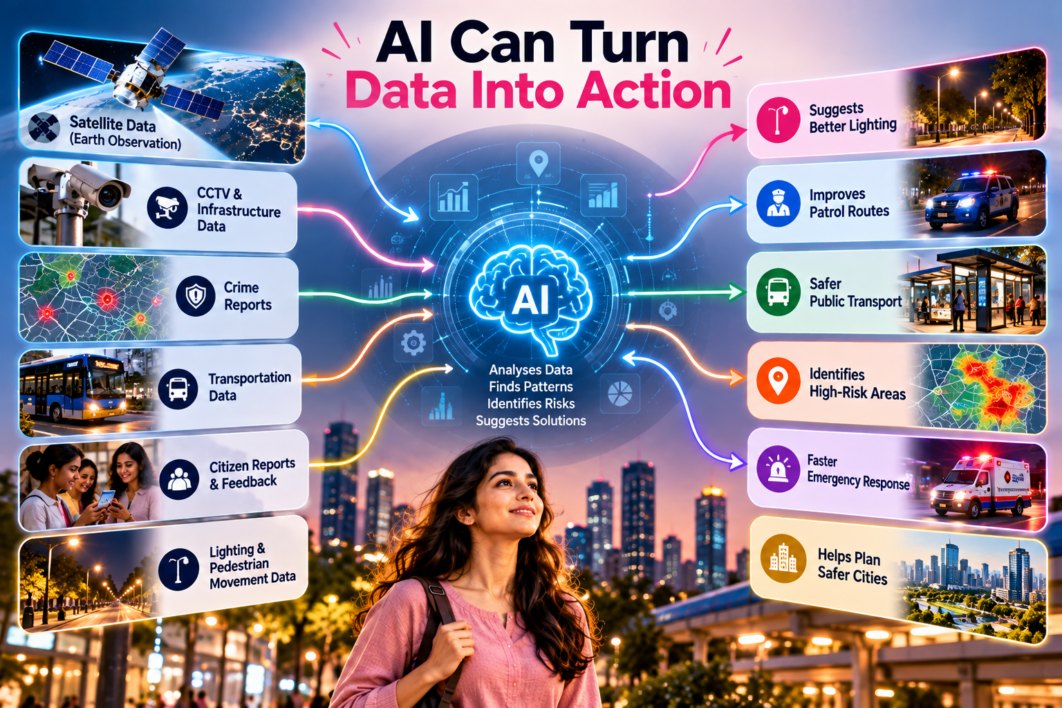
AI Can Turn Data Into Action
Data alone doesn’t make a city safer.
Intelligence does.
AI can analyse enormous amounts of information and identify patterns that humans may not easily notice.
For example: 1. Identify Potential Safety Hotspots
AI could combine:
Satellite data + crime reports + lighting data + transportation + pedestrian movement + citizen complaints
to identify areas that may require additional attention.
This doesn’t mean AI should label an area “dangerous.”
Instead, it can help city authorities ask:
“What infrastructure or services are missing here?“
 2. Turn Dark Streets Into Safer Streets
Sometimes the solution isn’t complicated.
It may simply be a streetlight.
AI can help cities identify roads where better lighting could improve visibility and accessibility—especially where people regularly walk at night.
 3. Make the Journey Safer
A woman’s journey isn’t always just:
Home → Office
It could be:
Home → Auto → Bus Stop → Bus → Walking → Home
AI can analyse these connections and help identify isolated bus stops, long waiting times, poorly connected routes and low-visibility areas.
The goal?
Safer mobility—not more surveillance.
 4. What If Your City Could Give You a Safer Route?
Imagine opening an app before leaving home.
Instead of simply saying “Danger Zone  ”, it could tell you: Better-lit route Public transport nearby Emergency help point
 Higher pedestrian activity
 Roadwork ahead
That’s when AI becomes more than technology.
It becomes a tool for better decisions.
And there’s one important ingredient AI can’t replace:
 Women’s voices.
Because a city may look perfectly safe from a satellite…
but only the woman walking through it knows how it feels.
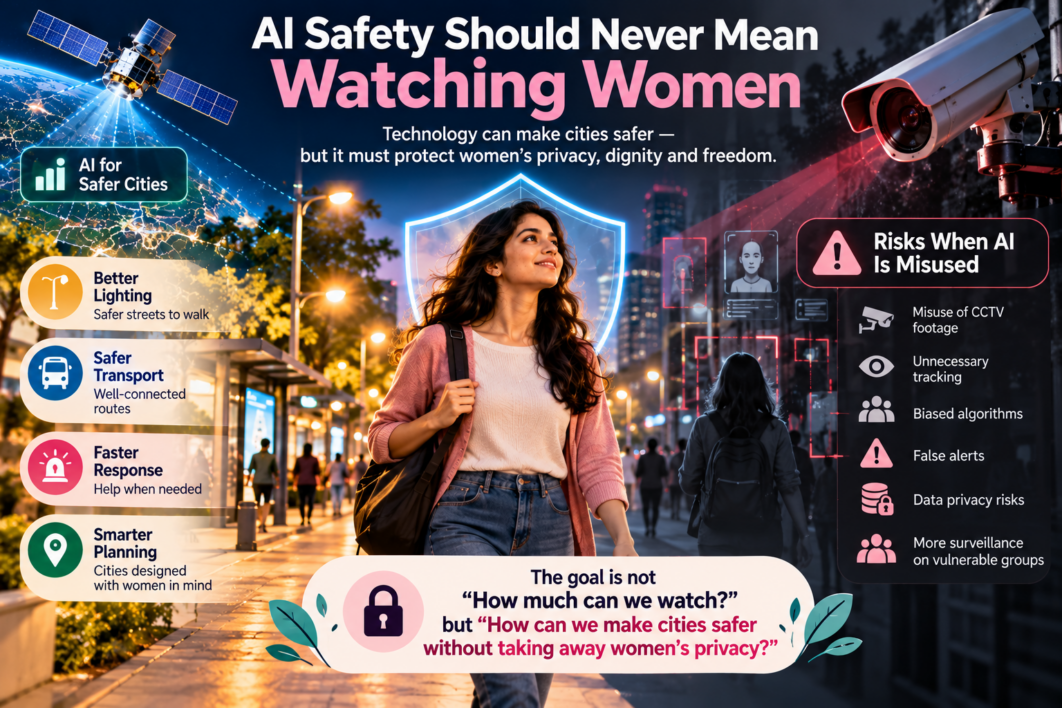
 AI Safety Should Never Mean Watching Women
Technology can make cities safer—but it can also create new privacy risks.
CCTV, AI and tracking systems must be designed responsibly, with:
 Privacy
 Fairness
 Data protection
Women’s voices at the centre
The goal isn’t:
“How much can we watch?”
The better question is:
“How can technology make us safer without taking away our privacy?”
That is the real challenge.
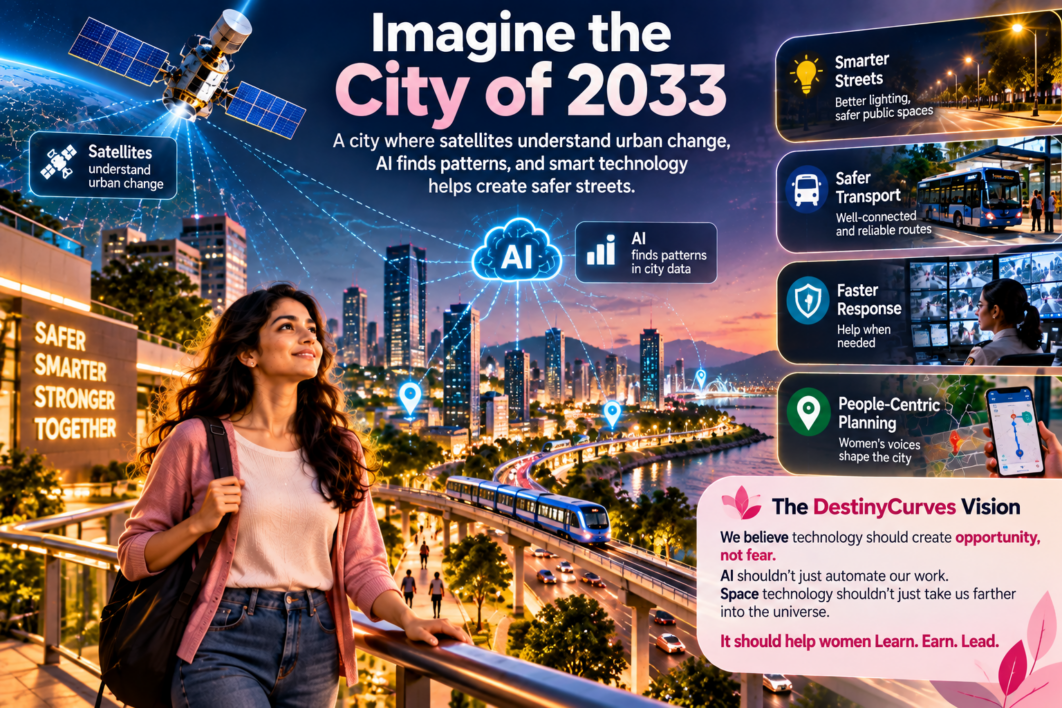
Imagine the City of 2033
A city where satellites understand urban change, AI finds patterns, and smart technology helps create safer streets.
Technology works quietly in the background—while people simply experience a safer, smarter city.
 The DestinyCurves Vision
We believe technology should create opportunity, not fear.
AI shouldn’t just automate our work.
Space technology shouldn’t just take us farther into the universe.
It should help women Learn. Earn. Lead.
Because the future isn’t something we wait for.
It’s something we build.
From Space to Safe Streets: How India’s Space Technology and AI Can Build Safer Cities for Women
What if the technology India sends into space could...
Read More
AI Tools vs AI Agents: What’s the Difference? A Simple Guide for Beginners
Artificial Intelligence is transforming how we work, learn, and...
Read More
What is an AI Agent?The Future of Smart Work for Women
Artificial Intelligence is changing how we learn, work, and...
Read More